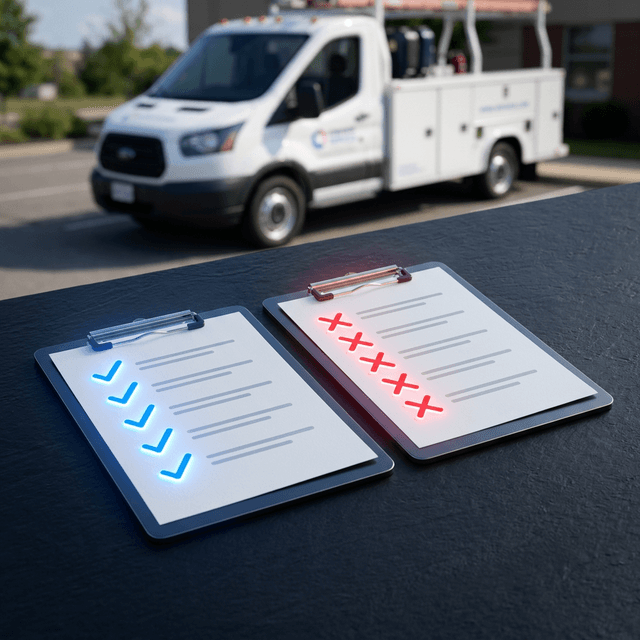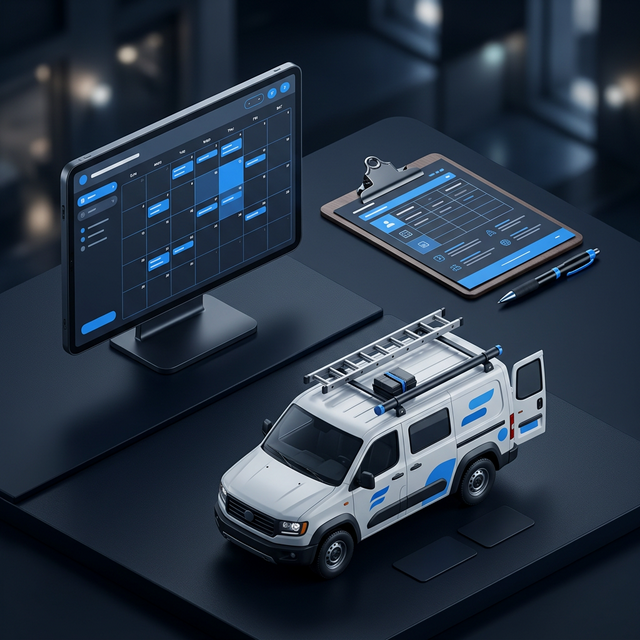
Jobber is an excellent CRM for manual dispatchers. DispatchNode AI is an autonomous dispatcher that answers the phone, schedules the route, and alerts the driver. Field service operators migrating to DispatchNode capture 3x more emergency bookings because AI never places a customer on hold.
The Call Center Bottleneck
Your field service business depends on emergency calls. A flooded basement or overflowing grease trap requires an immediate response. If your dispatcher doesn't answer the phone, the customer calls your competitor.
Jobber does many things right. It tracks your clients, generates beautiful invoices, and provides a drag-and-drop calendar for your dispatcher to use. But the critical failure point remains: You still need a human dispatcher staring at the screen. When three emergency calls arrive simultaneously during a severe storm, your human dispatcher can only speak to one person. The other two calls go to voicemail, and those customers immediately hang up to call the next company on Google.
If you don't answer, your competitor gets the booking. Here is how AI Voice Agents are replacing manual call centers to solve this exact problem.
DispatchNode AI vs Jobber: The Capability Gap
DispatchNode AI optimizes Field Service Routing by directly interacting with the customer via natural voice. Let's look at the core differences between a traditional CRM and an AI-first routing engine.
| Capability | Jobber | DispatchNode AI |
|---|---|---|
| Inbound Call Answering | No (Requires 3rd-party answering service) | Yes (Sub-second pickup time 24/7) |
| Autonomous Scheduling | No (Human must drag-and-drop) | Yes (Reads calendar and writes bookings automatically) |
| Live Inventory & Capacity Check | No (Dispatcher must manually ask technician) | Yes (Queries truck pump capacity via API before routing) |
| After-Hours Emergency Routing | No | Yes (Wakes up on-call technicians based on schedule) |
| Multi-language Support | English Only interface | Yes (Speaks Spanish, French, over 20+ dialects) |
Information Gain: If your field service software only tracks what has already happened (an invoice, a completed job), it is merely an archive. DispatchNode operates in the high-stakes funnel of "Call to Dispatch." Closing the 45-minute gap between a customer placing a call and a human finding an open slot on a calendar is where revenue is won.
How DispatchNode Replaces Manual Routing
Every step in this process runs without human intervention. The AI agent operates the software, so your operations manager can sleep through the night while the business generates revenue.
The Metrics of Autonomous Dispatch
If you are a solo operator, Jobber is a fantastic tool for keeping organized. But if you are a multi-truck operation attempting to scale revenue beyond $2M annually, your manual dispatch center is throttling your growth. DispatchNode provides the infrastructure to handle unlimited inbound volume without hiring a single additional call center representative.
What Happens When You Outgrow Manual Dispatch
Jobber was designed for small service businesses that need a clean, simple CRM. For a solo operator running 5-10 jobs per day, it is a great fit. The problems start when you scale past 3 trucks, hire a night shift, or expand into emergency services.
At that point, the manual dispatch model breaks down. Your dispatcher cannot answer three simultaneous emergency calls. Your after-hours answering service takes messages but cannot actually book jobs or check technician availability. Your on-call technician misses the page because the answering service texted the wrong number.
DispatchNode was built for this exact inflection point. Instead of replacing your CRM (you can keep Jobber for client management and invoicing), DispatchNode replaces your call center. The AI answers every inbound call, checks live technician availability against your calendar, books the job, and dispatches the nearest available truck. It handles Spanish-speaking callers, after-hours emergencies, and overflow during peak storms without adding a single employee to your payroll.
The economic case is straightforward. A full-time dispatcher costs $35,000-$50,000 per year in salary, benefits, and overhead. An after-hours answering service adds $500-$1,500 per month but cannot book jobs. DispatchNode replaces both for a fraction of the cost while capturing revenue that manual operations structurally cannot, specifically the 2 AM emergency calls that currently go to voicemail and never call back.
Keep reading: